

When I first helped a client launch a charcoal factory in Southeast Asia, the biggest surprise wasn’t the charcoal briquette machine or the raw material supply — it was the paperwork. He had budgeted eight weeks for permits. It took nearly five months. That experience taught me a lesson I now share with every new investor researching how to start a charcoal business: the licensing process, not the equipment, usually determines how fast your charcoal factory setup actually happens.
If you’re planning a charcoal manufacturing plant — whether for BBQ charcoal, shisha charcoal, or industrial activated carbon feedstock — this guide walks you through every permit and license you’ll need, why regulators ask for them, and the mistakes that delay projects by months.
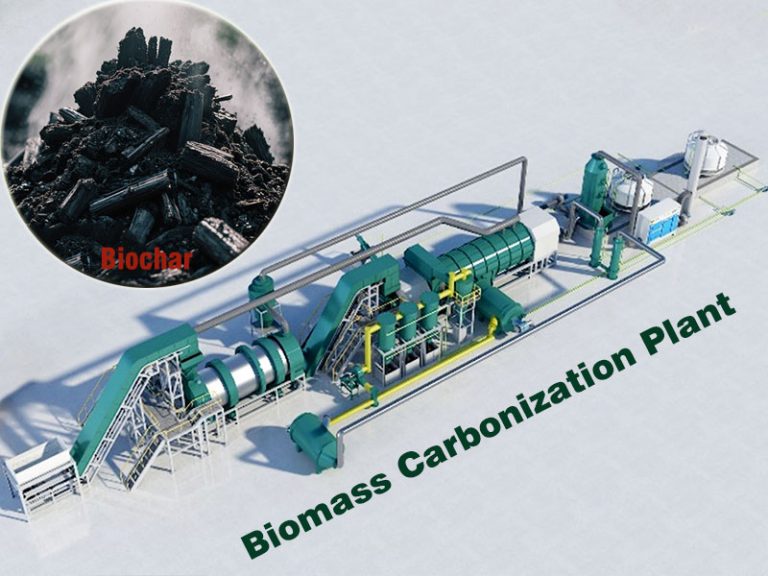
Charcoal production sits in an unusual regulatory space. It’s a biomass recycling business when you use sawdust, coconut shells, rice husks, or agricultural waste — but regulators still treat it as a manufacturing operation with real environmental and fire risks. Traditional earth kilns release heavy smoke and particulate matter, which is why most countries now require an environmental impact assessment (EIA) before approving any new facility.
In my experience, three things happen when you skip the permitting stage:
The starting point for any charcoal business is registering your entity — sole proprietorship, LLC, or corporation — and obtaining a general trade license from your local municipal authority.
What most first-time founders miss: your registered business scope must explicitly include “charcoal manufacturing” or “charcoal processing.” I’ve seen clients register a generic “trading company” to save time, then re-register when the environmental agency rejected the application. Register correctly the first time.
You’ll also need tax registration (GST, VAT) and, once you hire staff, social insurance and labor registrations — all part of a solid charcoal business plan.
Before falling in love with cheap land, verify it’s zoned for industrial manufacturing. I’ve watched two charcoal factory setup projects stall because the land was agricultural, and rezoning took over a year.
For a charcoal manufacturing facility, ideal zoning is an established industrial zone — which also simplifies three-phase power, water access for dust control, and distance from residential areas, a near-universal requirement due to smoke, dust, and truck traffic.
Practical rule from the field: keep your charcoal plant at least 500 meters from homes. If you’re producing wood charcoal rather than agro-waste charcoal, expect closer scrutiny.
This is usually the longest permit in your charcoal factory setup. Nearly every country requires an EIA — or a screening report — before construction.
In India, you’ll apply for Consent to Establish (CTE) and later Consent to Operate (CTO) from the State Pollution Control Board. In Kenya, NEMA handles environmental clearance for charcoal factories. In Indonesia, the AMDAL or UKL-UPL process applies depending on scale.
The assessment examines:
My strongest advice: choose your carbonization furnace technology before you file the EIA, not after. Regulators increasingly favor continuous carbonization furnaces with smoke-recovery systems over traditional pits or earth mounds, because modern equipment burns the smoke older methods vent directly. One client in Nigeria switched from planned earth kilns to a continuous carbonization furnace mid-application — the environmental approval moved noticeably faster because the documented emissions profile was dramatically cleaner.
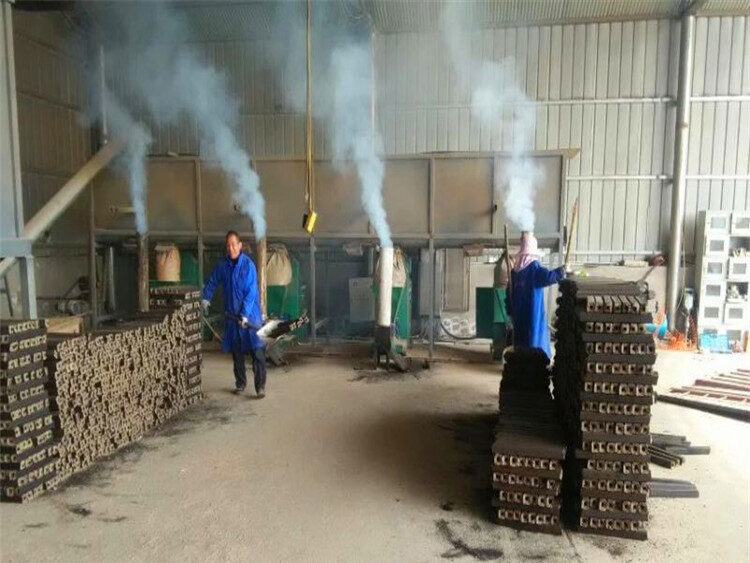
Distinct from business registration, a factory license is issued under your country’s industrial framework — in India under the Factories Act; in Nigeria through the state ministry of commerce; in Indonesia via the industrial licensing system.
This permit requires you to declare installed charcoal production equipment, capacity, worker numbers, factory layout, and power load. Inspectors may visit before issuing it — keep machinery documentation and layout drawings organized.
Non-negotiable. Charcoal is combustible, dryers run hot, and carbonization furnaces operate at 400–700°C. Every fire authority treats charcoal plants as elevated-risk facilities.
Expect to provide fire extinguishers (or hydrants for larger plants), evacuation routes, separation between raw material storage and finished goods, and staff fire-safety training records. In Kenya, Ghana, and India, you’ll receive a formal fire NOC. In one Ghanaian charcoal briquette factory I advised, the officer flagged carbon dust on beams — a valid catch, since fine dust is genuinely flammable. We added a cleaning protocol and passed on the second visit.
This is the permit most foreign investors don’t see coming. If your charcoal factory setup uses wood logs, many countries require proof of legal, sustainable sourcing.
Kenya’s Kenya Forest Service (KFS) issues charcoal producer licenses and requires charcoal movement permits verifying licensed sources. Similar forest-department approvals exist in Nigeria, Tanzania, and parts of Southeast Asia.
The smarter path — and the one I consistently recommend — is building your charcoal production line around agricultural waste: coconut shells, sawdust, rice husks, palm kernel shells, bamboo offcuts. These feedstocks typically bypass forest-sourcing permits, position your product as eco-friendly charcoal (a genuine selling point in EU and Middle East markets), and often cost less than virgin timber. This single decision has cut permitting timelines by 60% in two of my projects.
If you plan charcoal export — and most modern charcoal manufacturers do — expect a second certification layer:
Serious buyers now request charcoal lab reports before signing contracts. In-house or contracted quality testing is, in my view, no longer optional for export volume.
Realistic timeline from direct experience:
| Stage | Typical Duration |
|---|---|
| Business registration & trade license | 2–4 weeks |
| Land use / zoning confirmation | 1–3 weeks |
| EIA / environmental clearance | 2–4 months |
| Factory license | 4–8 weeks |
| Fire safety NOC | 3–6 weeks |
| Forest sourcing permits (wood-based only) | 1–3 months |
Plan for 4 to 8 months from first application to full legal operation, with environmental clearance as your critical path. You can order your charcoal production line and prepare the site during the review period — just don’t start production.
A question I get constantly alongside “charcoal factory cost”: excluding land and machinery, budget roughly $2,000–$10,000 for application fees, EIA consultants, and inspections. The bigger hidden cost is time — which is why a clean charcoal plant design and the right equipment documentation pay for themselves.
A charcoal factory setup is absolutely achievable — the global charcoal market keeps growing, driven by BBQ charcoal culture, rising shisha charcoal demand, and industrial uses from activated carbon to biochar soil amendment. The investors who win treat permits as a core project phase: sequence applications, choose clean technology early, and build around biomass and agro-waste feedstock. Do those three things, and the paperwork becomes a manageable checklist rather than a wall.
1. Do I need a special license to start a charcoal business?
Yes. Commercial charcoal production requires a factory license, environmental clearance, and fire safety approval in virtually every country. Selling without them risks fines or closure.
2. What is the hardest permit for a charcoal factory setup?
The environmental impact assessment (EIA). It typically takes 2–4 months as agencies review emissions, waste handling, and site location in detail.
3. How much does it cost to start a charcoal factory?
Machinery aside, charcoal plant cost for permits, consulting, and inspections runs about $2,000–$10,000 depending on country and scale — but the real variable is the 4–8 month timeline.
4. Can I use wood from my own land without a forest permit?
Usually not. Most countries regulate tree felling even on private land. Wood-based charcoal manufacturing requires forestry harvesting and transport permits.
5. Is a permit needed for coconut shell or sawdust charcoal?
You still need business, environmental, factory, and fire permits — but you typically avoid forest-sourcing licenses, which is why coconut shell charcoal factories are faster to license.
6. How far from residential areas must a charcoal factory be?
No universal rule, but 500 meters is a common minimum. Industrial zones make this charcoal factory setup requirement easy to satisfy.
7. Do traditional kilns affect permit approval?
Significantly. Earth pits emit heavy smoke and are increasingly rejected. Continuous carbonization furnaces with gas recovery make environmental clearance much smoother.
8. What fire safety equipment is mandatory for a charcoal plant?
Fire extinguishers, evacuation routes, storage-production separation, and staff training; larger charcoal factories may need hydrants per local fire codes.
9. Can I export charcoal without an export license?
No. Charcoal export requires customs registration, certificates of origin, and — for wood charcoal — phytosanitary certificates. Buyers often demand quality lab reports too.
10. How long before I can legally start charcoal production?
Realistically 4–8 months from application start. You can overlap charcoal production line procurement and site works during the review period.
11. Does equipment choice affect charcoal factory licensing?
Definitely. Regulators review machinery specs, and clean charcoal manufacturing equipment with documented emission control can shorten approval times.
12. What is the best raw material for a new charcoal factory?
Biomass waste — coconut shells, sawdust, rice husks — avoids forest permits, lowers charcoal plant cost, and appeals to eco-conscious BBQ charcoal and shisha charcoal buyers.
Permits are half the battle — the right charcoal manufacturing equipment makes approval faster, production cleaner, and returns stronger. At Huaxin, we’ve helped producers across Africa, Southeast Asia, and the Middle East launch compliant charcoal production lines with:
✅ Continuous carbonization furnaces with low-emission gas recovery — the technology regulators prefer
✅ Charcoal briquette machines & complete lines for coconut shell, sawdust, rice husk & more
✅ Custom factory layout plans that pass fire and environmental inspections
✅ Free consultation & quotation — plus documentation support for your charcoal factory permits
Contact Huaxin today for a free quote and a customized charcoal factory setup solution. Tell us your raw material and target capacity — we’ll design a charcoal production line that passes inspection the first time.