
Six years ago, our poultry farm had a serious problem: mountains of chicken manure and no idea what to do with them. The piles smelled bad, attracted flies, and took almost four months to break down. Today, that same waste earns us steady income as certified organic fertilizer. The difference was simple—we finally mastered the right composting technology for organic fertilizer.
In this guide, I will share the exact method we use, so you can learn how to make organic fertilizer from manure faster and cheaper.
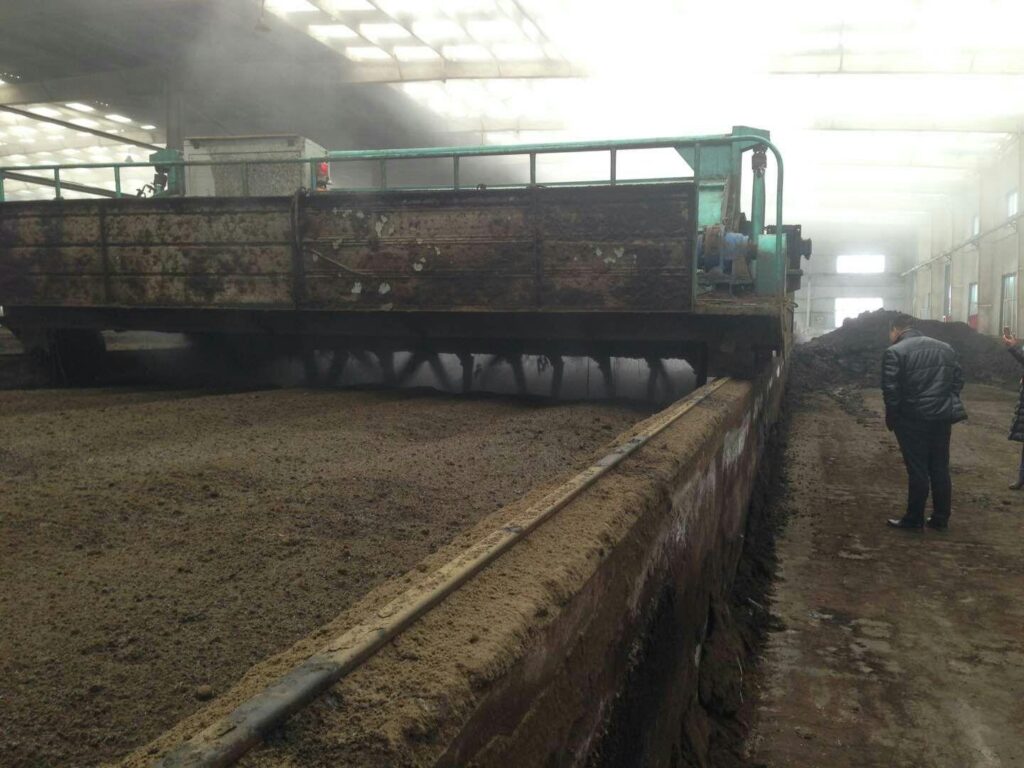
1. Why Composting Technology Matters for Fertilizer Quality
Raw manure cannot be used directly on crops. It contains pathogens, weed seeds, and excess moisture. Proper aerobic composting transforms it through controlled microbial fermentation—producing stable, safe, and nutrient-rich compost fertilizer.
From our field experience, a well-managed compost pile with correct parameters finishes in 4–6 weeks, compared with 3–6 months for uncontrolled piles. The secret is compost pile temperature control: keep it between 55–65°C. This range kills harmful bacteria while keeping beneficial microbes active.
2. Four Key Parameters of Successful Manure Composting
- After years of trial and error, we found that how to compost manure quickly comes down to four numbers:
- C/N ratio: The ideal C/N ratio for composting is 25:1–30:1. Fresh chicken manure is too nitrogen-rich, so we mix it with rice straw or sawdust. This balance prevents odor and speeds up decomposition.
- Moisture: Keep it at 50–65%. Squeeze a handful—water should drip slowly, not stream. High-moisture cow dung needs dry bulking agents added first.
- Oxygen: Aerobic microbes need constant air. Without regular turning, the pile turns anaerobic within 72 hours, causing bad smells and slow results. A good compost turner machine solves this.
- Particle size: Crush materials to 2–5 cm so microbes can work efficiently.
3. Windrow Composting: Our Recommended Method for Most Farms
For most fertilizer producers, windrow composting offers the best balance of cost, quality, and scale. We pile mixed materials into long rows 2–3 meters high, then turn them with a windrow compost turner every 2–4 days.
Modern compost turner machines process 600–1,200 m³ per hour. Depending on your site and budget, you can choose:
- Self-propelled compost turner – flexible, no tractor needed, ideal for small scale composting;
- Crawler compost turner – strong grip on wet ground, perfect for high-moisture manure;
- Tractor-mounted compost turner – lowest investment, great for farms on a budget;
- Groove-type compost turner – best for enclosed plants needing continuous production.
If you are researching a compost turner for sale, match the machine width to your windrow size and daily material volume. This single decision affects your whole organic fertilizer production process.
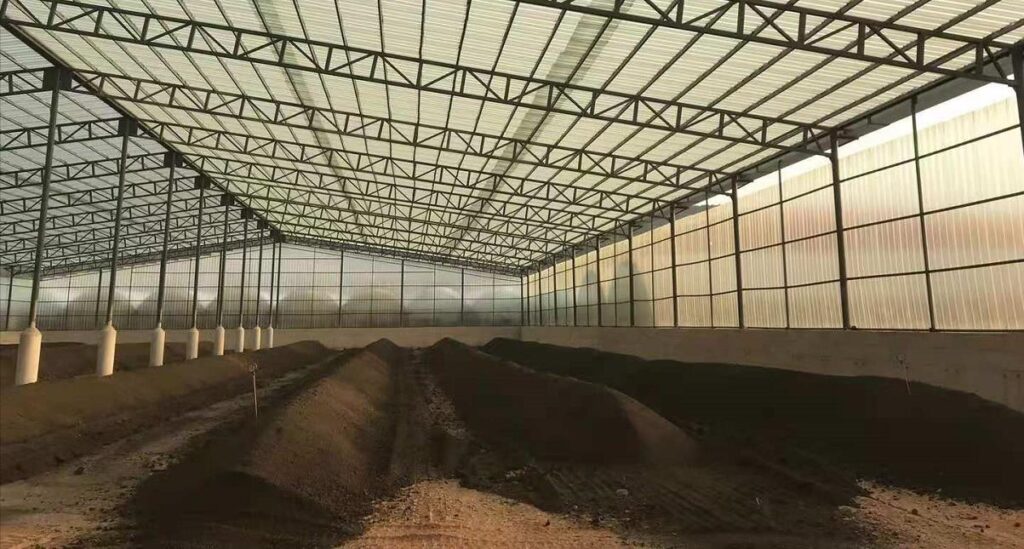
4. When to Choose a Fermentation Tank Instead
For urban sites or odor-sensitive areas, an enclosed compost fermentation tank is the smarter choice. These systems adjust temperature up to 80–100°C, capture odors, and finish harmless treatment in just 7–10 days—occupying only 10–30 m². For sludge composting or food waste composting, the tank pays back quickly through faster turnover and zero complaints.
5. Our Step-by-Step Organic Fertilizer Production Process
Here is the exact workflow we follow now:
- Prepare raw materials – mix manure and straw to reach C/N 25–30:1, adjust moisture to 50–65%.
- Add microbial inoculants – quality compost starter can cut fermentation time by 2–3 weeks.
- Build windrows – form rows matching your turner’s working width.
- Active fermentation – turn every 2–4 days, monitor temperature daily.
- Curing – let the compost mature 1–2 weeks until temperatures drop naturally.
- Screen and process – screen out oversized particles, then move to fertilizer granulation or bagging.
The finished product is dark, crumbly, and earthy-smelling—ready for the market or your own fertilizer production line.
Final Thoughts
Composting technology is simple in theory but unforgiving in practice. Miss the C/N ratio or skip turning, and you lose weeks. Get the parameters right, choose equipment matched to your materials, and manure composting becomes a reliable, profitable business.
Ready to start? Contact Huaxin, a professional organic fertilizer machine manufacturer, for a free customized composting solution and compost turner price quotation—turn your waste into fertilizer with confidence.
FAQ
1. What is the best composting technology for organic fertilizer?
For most producers, windrow composting with mechanical turning offers the best cost-performance balance. Enclosed fermentation tanks suit odor-sensitive or land-limited sites.
2. How to make organic fertilizer from chicken manure?
Mix chicken manure with carbon materials like straw to reach a 25:1–30:1 C/N ratio, keep moisture at 50–65%, and turn the pile every 2–4 days. Finished compost is ready in 4–6 weeks.
3. What is a compost turner machine and why do I need one?
A compost turner machine mixes the pile, supplies oxygen, and releases excess heat—dramatically speeding up fermentation and preventing odor.
4. What is the ideal C/N ratio for composting manure?
Between 25:1 and 30:1. Too much nitrogen causes odor; too much carbon slows decomposition.
5. How long does the organic fertilizer production process take?
Typically 4–8 weeks using windrow composting, or 7–10 days in an enclosed fermentation tank.
6. What temperature should a compost pile reach?
55–65°C. This kills pathogens and weed seeds while preserving beneficial microorganisms.
7. How often should I turn my compost windrows?
Every 2–4 days during active fermentation, less during curing.
8. What capacity compost turner do I need for a small farm?
For 5–20 tons of manure per day, a small compost turner handling 600–800 m³/hour is usually sufficient.
9. How much does a compost turner cost?
Compost turner prices vary by type and capacity—from a few thousand dollars for tractor-drawn models to more for large crawler systems. Request a detailed quotation for accurate pricing.
10. Can I compost sludge and food waste?
Yes. Both need dry bulking agents to adjust moisture and C/N, and enclosed fermentation is recommended for odor control.
11. How do I know when compost is finished?
It is dark brown or black, crumbly, earthy-smelling, and the original materials are no longer recognizable.
12. Does Huaxin supply a complete organic fertilizer production line?
Yes. As an experienced fertilizer equipment manufacturer, we provide the full line—from composting equipment, crushing, and mixing to granulation and packaging.


