
When buyers search for organic fertilizer manufacturing equipment, they are often really searching for answers: What machines do I need? How much does an organic fertilizer production line cost? Which fertilizer granulator machine fits chicken manure? In my experience reviewing fertilizer projects, most losses happen because buyers compare prices before they understand the process.
This guide is written for people who plan to build a small scale organic fertilizer plant or a larger commercial project. It follows the real production flow—composting, crushing, mixing, granulating, drying, screening, and packing—so you can choose the right organic fertilizer making machine with confidence.
Start with your raw material, not the machine price
The first question I always ask is: what is your feedstock? Chicken manure, cow dung, pig manure, sheep manure, mushroom residue, straw, food waste composting material, sugar filter mud, and sludge all need different handling.
For example, chicken manure composting usually begins with a manure dewatering machine, because fresh poultry litter is too wet for direct granulation. A screw press dewatering machine can cut moisture quickly and make the next steps stable. Dry materials like straw may need a semi-wet material crusher before mixing. If you skip this stage, even the best organic fertilizer pellet machine will block, wear fast, or produce weak granules.
A reliable supplier should ask about moisture, fiber content, particle size, and daily volume before quoting any fertilizer production equipment.
The complete organic fertilizer production line
A standard granular line includes these core machines, and each one matches a clear search intent:
- Manure dewatering machine – removes excess water from wet manure.
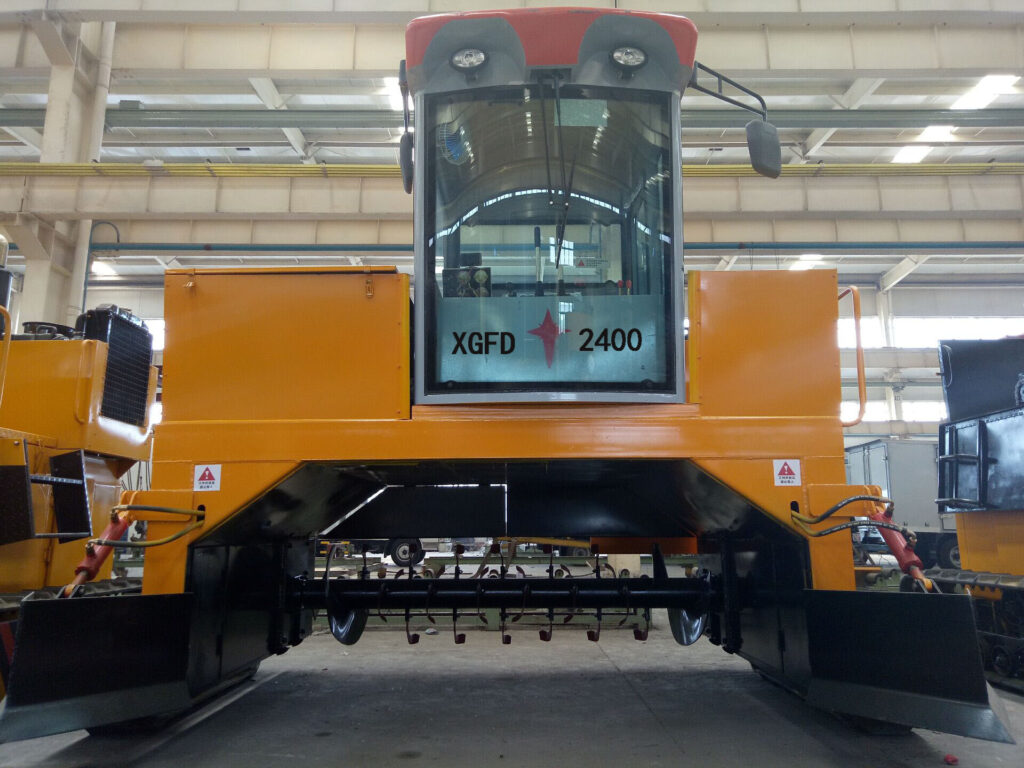
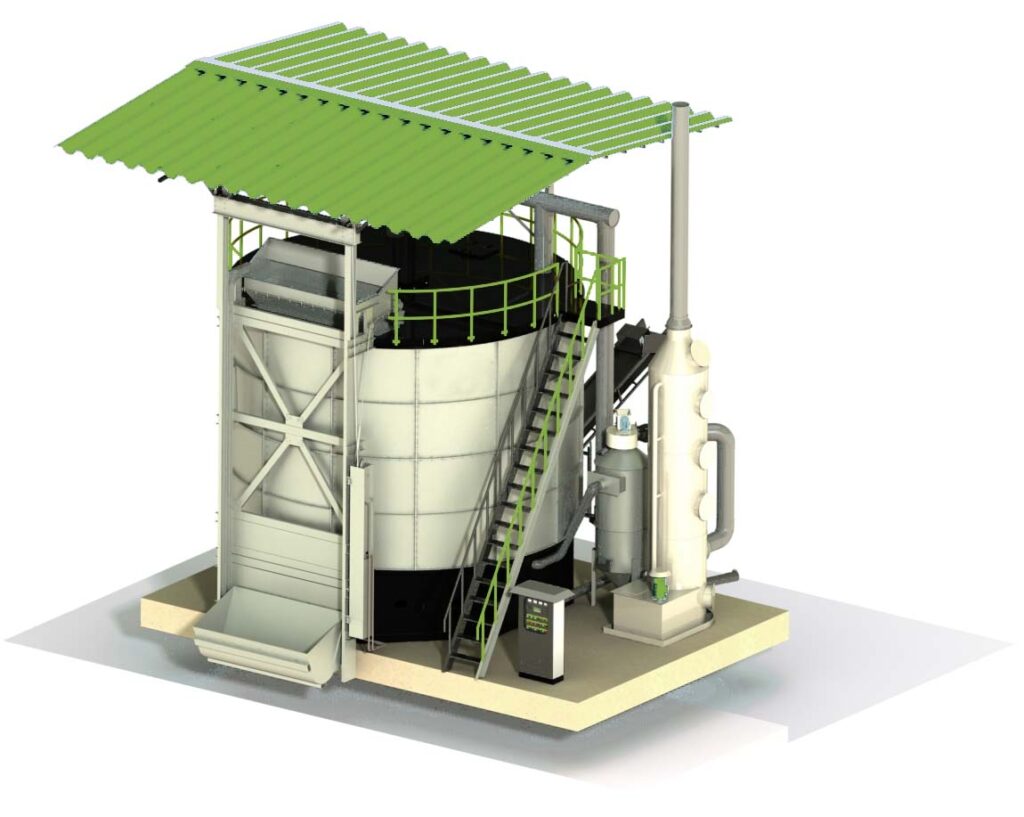
- Compost turner – supports aerobic fermentation. Popular options include the self-propelled compost turner, windrow compost turner, groove type compost turner, and in-vessel composting system.
- Fertilizer crusher machine – such as a semi-wet material crusher or chain crusher for caked compost.
- Horizontal mixer / double shaft mixer – blends compost with additives, microbial inoculants, or NPK materials.
- Organic fertilizer granulator – the heart of the line.
- Rotary dryer for fertilizer – reduces granule moisture to a storable level.
- Rotary cooler – cools granules and improves hardness.
- Fertilizer screening machine – returns oversize and fines back into production.
- Fertilizer coating machine – optional, helps prevent caking.
- Fertilizer packing machine – automatic weighing and bagging for 25 kg, 50 kg, or big bags.
- Belt conveyors and bucket elevators – connect every stage into one continuous organic fertilizer processing plant.
If your market accepts powder products, a powder organic fertilizer production line needs fewer machines and less energy. But in most retail markets, organic fertilizer pellets store better, spread more evenly, and sell at a higher price.
Composting equipment: the step that decides product quality
Many first-time buyers underestimate fermentation. If compost is not fully decomposed, the final product can smell bad, burn roots, or fail quality checks. That is why how to make organic fertilizer always starts with proper composting.
For open-air sites, a compost turner for sale listing is usually the most economical choice. Windrow turning works well for farms with enough land. For controlled factories, a groove type compost turner or compost turning machine with transfer car improves efficiency. For buyers searching organic waste composting machine with tight space or strict odor rules, an in-vessel fermentation tank gives faster, cleaner results.
From field experience, the machine matters less than process discipline: keep moisture around 50–60%, turn on schedule, monitor temperature, and let the pile reach full maturity.
Granulation: choosing the right fertilizer granulator machine
This is where most “which machine should I buy” questions converge. The honest answer: the best fertilizer granulator machine depends on your material and capacity.
- Disc granulator: simple, low cost, ideal for a small organic fertilizer plant. Good for buyers comparing disc granulator price and ease of operation.
- Rotary drum granulator: built for continuous, larger output. It is a common answer to “rotary drum granulator for sale” searches for commercial plants.
- New type organic fertilizer granulator (stirring tooth type): popular for pure organic materials because it handles moisture and fiber well.
- Double roller granulator (dry granulation): no drying needed, lower energy cost, but granule shape is different from round ball granules.
- Flat die pellet mill: often searched as fertilizer pellet making machine; output is cylindrical pellets.
If you want retail-grade round granules, test actual material before ordering. Photos in a catalog cannot show dust rate, breakage rate, or surface finish.
Drying, cooling, screening, and bagging protect your margin
After granulation, a fertilizer drying machine and rotary cooler are not optional in wet granulation lines. Without them, granules cake in the bag, break in transit, and grow mold in storage. A fertilizer vibrating screen or drum screener recycles off-size particles, which directly improves yield.
For packing, an automatic fertilizer packing machine with reliable weighing reduces labor and complaint rates. Buyers comparing an organic fertilizer plant for sale often overlook these back-end machines, but they decide whether your product reaches customers intact.
Capacity and cost: plan for growth, not just launch day
A common search pattern is “organic fertilizer machine price” or “organic fertilizer production line cost”. The truthful answer: cost depends on capacity, automation, and material condition. A small scale organic fertilizer production line of 0.5–1 t/h is very different from a 5–10 t/h commercial plant.
When comparing quotes, check:
- Real capacity with your actual raw material, not ideal test material;
- Total power demand and your local electricity supply;
- Wear parts such as blades, screens, rollers, and liners;
- Spare parts list and delivery time;
- Installation, commissioning, and operator training;
- Foundation drawings, electrical diagrams, and manual language;
- hether the price includes a fertilizer conveyor system and control cabinet.
The cheapest fertilizer making machine is often the most expensive over five years. Downtime, regrinding, rework, and customer complaints cost far more than a reasonable upfront difference.
Why buyers choose Huaxin
A trustworthy partner should do more than send a price list. At Huaxin, we start with your raw material analysis, target capacity, product form (powder or granules), workshop dimensions, and budget. Then we configure the organic fertilizer manufacturing equipment as a system—composting equipment, crushing, mixing, granulation equipment, drying, cooling, screening, coating, and fertilizer bagging equipment—so every stage matches the next.
We also support export projects with clear documentation, packing plans, installation guidance, and after-sales service, which is critical when your factory is thousands of kilometers from the supplier.
Final buyer's checklist
Before signing a contract, confirm:
- Have you tested moisture and particle size of your raw material?
- Do you need powder or organic fertilizer granules?
- What is your required output per hour and per year?
- Which granulator type fits your material, not just your budget?
- Do you have space for dryer, cooler, and conveyors?
- Are voltage, frequency, and control panel language correct for your country?
- Is a spare parts package included?
- Does the supplier offer installation and training?
- Are you comparing total cost of ownership, not only machine price?
- Can the supplier explain the whole process clearly?
The right organic fertilizer production equipment should run stably, produce consistent quality, and make economic sense for your market. That is the standard we build to at Huaxin.
FAQ
1. What is included in a complete organic fertilizer manufacturing equipment line?
Typically a manure dewatering machine, compost turner or fermentation tank, crusher, mixer, organic fertilizer granulator, dryer, cooler, screening machine, optional coater, fertilizer packing machine, and conveyors.
2. How much does an organic fertilizer production line cost?
It depends on capacity and configuration. A small powder line costs far less than an automatic granular line with drying and packing. Share your raw material and capacity for an accurate quote.
3. Which machine is best for chicken manure fertilizer production?
Usually chicken manure composting starts with dewatering, then fermentation with a compost turner, crushing, mixing, and granulation with a disc, drum, or new type granulator.
4. Can I buy just a compost turner?
Yes. Many farms start with a windrow compost turner or self-propelled compost turner and expand into a full organic fertilizer processing plant later.
5. What is the difference between a disc granulator and a rotary drum granulator?
A disc granulator is simpler and better for small capacity; a rotary drum granulator suits continuous, larger-scale production with higher output.
6. Is a dryer necessary for organic fertilizer pellets?
In most wet granulation processes, yes. A rotary dryer for fertilizer prevents caking and mold during storage.
7. Can one line produce both powder and granular organic fertilizer?
Yes. Powder lines need fewer machines; adding granulation, drying, and cooling converts the same base system into a granular line.
8. What should I prepare before asking for a quotation?
Provide raw material type, moisture, daily output target, final product form, workshop size, voltage standard, and destination country.
9. Do you supply small scale organic fertilizer plant equipment?
Yes. Huaxin configures lines from small scale organic fertilizer production to large commercial plants.
10. How do I control odor in a fertilizer plant?
Use controlled fermentation, regular turning, covered composting where possible, and deodorizing or ventilation systems.
11. Do you provide installation and after-sales service?
Yes. Huaxin supports installation guidance, commissioning, operator training, and spare parts supply.
12. How can I get a free quotation from Huaxin?
Send your raw material details, capacity target, product type, and workshop size. Our team will reply with equipment options, layout suggestions, and a free quote.
Contact Huaxin today for a customized organic fertilizer production line plan, detailed product information, and a free quotation.


